Bottled Water: Convenient Solution or Toxic Rip-off?
When you’re out-and-about and need to quench your thirst, bottled water can save the day.
It also comes in handy during emergencies and disaster relief efforts.
Most bottled water contains tap water that has been filtered by a process called “reverse osmosis” to remove impurities.
However, bottled water can come with some pretty big downsides.
The longer the bottle is stored, the more toxic chemicals leach into the water.
Most plastic bottles contain a compound called bisphenol-a (BPA), which is known to disrupt hormones in the body---but that’s just one of the many toxins found in bottled water.
Not all bottled water undergoes reverse osmosis, and shockingly more than 24,000 chemicals have been detected in a single bottle of water!
In a recent large-scale study, 93 percent of the bottles tested contained tiny pieces of plastic, and if you thought that your favorite big-name brands would be safe, think again…
Some of the most popular brands in the study were contaminated.
In addition, bottled water is also bad for the Earth.
For starters, manufacturers have to burn fossil fuels to produce and ship plastic water bottles.
At the same time, the bottles themselves pollute waterways with microplastics that can never be removed.
Bottled water is a modern-day convenience that has a ton of downsides for your health and the environment.
Clearly, there’s got to be a better way!
Tap Water: the Good, the Bad and the Toxic
Their regulations set a maximum limit for specific contaminants in public water systems.
However, many contaminants are difficult to monitor and are even harder to treat.
It isn’t uncommon for dangerous pollutants to slip through the cracks and into your tap water, including:
- Arsenic
- Copper
- Fluoride
- Chlorine
- Radon
- Uranium
- Pesticides
- Bisphenol-a (BPAs)
- Manufacturing operation byproducts
- Sewer overflows and wastewater releases
- Runoff from concentrated animal farming operations
Furthermore, even municipal water systems that meet the EPA’s guidelines can carry health risks.
For example, a recent study from the Environmental Working Group estimates that at least 100,000 cancer cases may be linked to tap water.
The study looked at 22 cancer-causing contaminants found in 46,363 communities across the United States.
Many of these cases were due to the heavy metal arsenic, as well as by-products of disinfectants used to treat water.
You heard right, even the compounds that “clean” your tap water could be hurting you.
For example, when chlorine reacts with organic matter in the water, it produces compounds called disinfection by-products (DBPs).
In addition, DBPs destroy vitamin E, promote inflammation and have been linked to liver failure, pre-atherosclerosis and even cancer.
Chances are, your tap water could probably use an upgrade.
Water Filters: Turning Tap Water Around
When you run your sink, you should be able to trust that the water that comes out of it is safe.
Fortunately, reverse osmosis (RO) filters can turn your tap into a toxin-free, nutritious water fountain.
Some of the benefits of in-home RO filters include:
- Limits plastic water bottle consumption and reduces your carbon footprint
- Removes dangerous contaminants like lead, arsenic, pesticides and nuclear waste
- Remineralizes your water with magnesium, calcium and other electrolytes
- Makes perfectly alkalized, balanced pH water every time
- Removes chemical disinfectants, like chlorine
- Protects your pipes from “hard” water
- Improves taste
RO filters combine all of the most effective water purification technologies into a single unit that fits right under the kitchen sink.
First, the water passes through a sediment filter to remove large particles and discoloration, then a carbon filter to remove chlorine, ion exchange resins to remove hard minerals, and an RO membrane to remove dangerous contaminants like nuclear waste.
Last but not least, high-end RO systems include a final remineralization stage to add healthy minerals and balance pH.
By adding minerals like magnesium and calcium, RO filters may help reduce the risk of bone fractures, heart disease and premature birth.
Ultimately, RO water systems provide the benefits of reverse osmosis without the downsides of plastic bottles.
Feel like it’s time to up your water game?
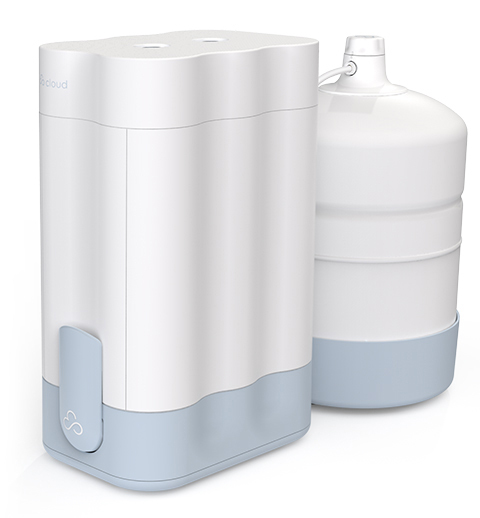
At Cloud, we produce some of the finest in-home water systems known to man.
Click here to learn more.